воскресенье, 19 мая 2013 г.

Perception of Neutrogena brand by Russian women


In order to understand the attitude of Russian consumers towards Neutrogena, we examined several blogs and forums. The research revealed that the overall perception of Neutrogena products by Russian consumers is considered to be strong positive. They know about dermatologists’ participation in the creation of the product formula. Furthermore, they value quality of the product. Many of them having tried one Neutrogena product, planed to try other ones. That was interesting to notice that some consumers were familiar with the product before Neutrogena was launched in Russia (“When I was offered to try Neutrogena, I agreed with pleasure, because I have known this brand long before it appeared in Russia”)

 Russian consumers are familiar with all products of Neutrogena presented in Russia and even outside Russia. The main series of Neutrogena in Russia today is Norwegian formula, is aimed to provide care for dry and sensitive skin, which is highly required in Russia due to the climate conditions. Nevertheless, cleansers and lotions for deep cleaning and oil removal of other Neutrogena’s series are presented on the market as well.

What do Russian women wait from cleansers?
·                  Reasonable price-quality ratio
·                  Satisfaction of needs (acne, the youth of the skin)
·                  Hypoallergenic ( consumers with more sensitive skin types)
·                  Quality of ingredients
·                  Dermatologist recommended products (sense of confidence and trust)
·                  Stock availability (easy purchases)
·                  Promotions (free samples, etc)

What can prevent Russian Consumers from buying Neutrogena?
·                    Brand unawareness (medium probability)
·                    Previous negative experience with the brand (low probability)
·                    Financial instability (low to medium probability)   

  
Sources (all in Russian):
                                        

Promotion on Other Markets

Before developing our own marketing campaign for Neutrogena Wave in Russia, we decided to investigate what they do in other markets. The product has been launched in the USA, the UK, Canada, Australia and some regions of Middle East. Here we give a detailed overview of the tools used to promote Neutrogena Wave there.
J&J supports its new product with a significant marketing campaign. It includes both so called “standard” elements and innovative methods.

As for standard elements:


  • Heavyweight television advertising
  • Standard online ads
  • Print ads
  • A microsite. It featured product information, eductional material and promotional mechanic to enter prize draw promoted in-store and loose insert in pack.
  • Web banners
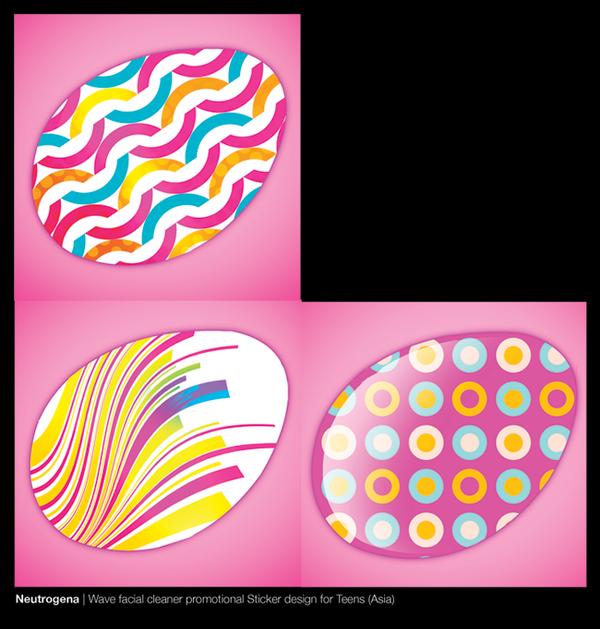
  •  Promotional stickers
  • Discount coupons: are supplied with the Neutrogena Wave allowing consumers to receive money-off of the pads the device uses.
  • Brand ambassadors
As we see it, these instruments are widely used by the competitors and are a kind of a “must-have”. However, the company aims at making Neutrogena Wave different and memorable. To achieve this, they have also used some unusual and more creative ways to promote the brand in general and Neutrogena Wave in particular. The examples you can find below:


J&J has launched a website to promote Neutrogena Wave in advance of its main launch. The site aims to drive sign up to J&J’s Neutrogena Young Skin CRM program which offers a variety of skin and fashion tips. Consumers who join the programme will be entered into a prize draw to win a trip to New York and $1000 spending money. Runners-up prizes include £150 TopShop shopping vouchers. 


 The company has organized a donation campaign of $1 for every Wave Sonic Power-Cleaner sold up to $200, 000 to GlobalGiving, which is an internet-based network that connects donors directly to the causes they care most about. Quizzes were organized on Neutrogena Facebook page. followers can choose which charities should receive the money:  they can support a disaster relief, environmental or educational cause. Each sphere is headed by Neutrogena brand ambassadors Vanessa Hudgens, Hayden Panettiere and Miranda Cogrove.
 In addition to the donation campaign, brand ambassadors call the customers to buy Promotion Bags designed by them personally. Miranda’s (center) is a heart constructed of pencils – made to benefit educational courses. Vanessa’s (right) 
 In the Middle East, as part of the online campaign, Johnson & Johnson wanted to approach people by using social mainstreams like Facebook. The Facebook application was a competition, and can be considered as a race. Johnson & Johnson had to choose 300 girls from Lebanon, Kuwait and United Arab Emirates. These girls were called as "Ambassadors". Each Ambassador had to race by inviting friends to help build the longest wave. The Ambassador who will have the 1st hundred followers will be the winner. The application was divided into 2 parts:

1.      The Ambassadors were invited to the application so they can register themselves in a limited time. 
2.      The Ambassadors will invite their friends to the application then the friends would come to the application fill up the registration form and choose the ambassador to follow.

- A focused ad campaign that was driven by a contest to send the winners to a Vanessa Hudgens’s concert in Los Angeles and have them receive a complete makeover using Neurogena products. The purpose of the campaign was to promote Neutrgena’s line of acne products for teens with its Pink Grapefruit Acne Wash headlining the list. This is achieved through the association and recommendation of the brand’s celebrity spokesperson, Vanessa Hudgens.

We believe that these innovative methods have allowed Neutrogena to strengthen its brand and promote their new product. They have not only introduced Neutrogena Wave, but also involved a customer and made him/her participate. We think, this is a very wise decision since customers see that the company cares about them and wants to be closer, which creates positive associations and positive presupposition towards the promoted product. 


среда, 15 мая 2013 г.

Porter's 5 forces analysis for Neutrogena


For the meso-part of our analysis we have chosen Porter’s five forces framework: threat of new entry, bargaining power of buyers, bargaining power of suppliers, threat of substitutes, and competitive rivalry in the industry.

Threat of new entry
The cosmetic industry has a low threat of new entrants due to the following factors. First of all, the costs of entry are huge. Developing unique cosmetic products requires a lot of resources, thorough research and complicated manufacturing process. Only a few middle and small scale firms can afford such expenses and perform effectively. In addition, there are such huge competitors such as Estee Lauder, L’oreal, Clinique, Unilever, etc, who all have a large market share.

Bargaining power of customers
The cosmetics industry has a high bargaining power of customers due to the increased competition and wide availability of cosmetic products from many different manufacturers. Since these products have high substitutes, then it is possible for consumers to force manufacturers to reduce their product prices by buying those of their competitors. This is a challenge which manufacturers of cosmetic products face across the world.

Bargaining power of suppliers
The cosmetic industry has a low bargaining power of suppliers due to the high number of market players and large supply of diverse products to the market. There are many cosmetic products which are developed by both large and small manufacturers. The supply is so huge that consumers have the power to influence the market prices as opposed to the suppliers.

Threat of substitutes
The threat of substitute products could be characterized as moderate. In this case, substitute is not a facial wash produced by a competitor, it could be a trip to a beauty salon where a professional dermatologist takes care of your skin or a trip to your own bathroom where you perform the same cleansing routine every day. Neutrogena Wave might be a cheaper alternative for the former, but a more expensive one to the latter, therefore the threat of substitutes is moderate. 

Competitive rivalry in the industry
Cosmetics industry is very competitive. Various surveys show that every year more women in Russia start using cosmetics. That is more, on average Russian woman uses more cosmetics than a European one, therefore Russian market attracts more players due to its big potential. 

понедельник, 13 мая 2013 г.

Neutrogena SWOT & Value Chain Analysis


SWOT
Strengths
Opportunities
1. Availability in many countries such as the USA, the UK, Canada
2. Has a wide product range like cleansers, moisturizers, sun protection, fairness, anti-aging etc
3. Good Supply chain and distribution network
4. Strong advertising media through Ad campaigns
5. Associations with celebrities help in creating a string brand image
1. To enter rural markets 
2.Launching products for lower middle class
3. Partner with hotel chains, clinics, hospitals
4. Position the brand globally
5. Target groups that show the highest growth potentials

Weaknesses
Threats
1. An overabundance of overlapping anti-aging products that is perennially confusing for consumers
2.Despite being a high quality product, its global reach is limited
3. A narrow market segment covered by its positioning
1. Local brands and other international brands
2. Cheaper and less medical-like treatments
3. strong competitors without and within the industry for cosmetics
4. copying of technology


Value Chain
Infrastructure & Human Resource Management
Specialists mention, that Neutrogena’s organizational structure is its major weakness because it is decentralized. This makes other departments products to be cannibalized as well as making the control of the company difficult. The company’s structure is more decentralized due to the many sub units and departments put in place. This decentralized system makes it even more difficult in the minimization of product cannibalization from different departments also the organization's control.
Technology Development & Procurement
Neutrogena spends a lot on scientific research. The company brings innovation to its products through its efficient research and development department. For instance, Neutrogena examined thousands of natural ingredients to find the best bionutrients, such as Peruvian Tara Seed, to promote healthy-looking skin. In addition, Neutrogena Neuturals uses environmentally sensitive post-consumer recycled material in its packaging and built a first-of-its-kind green server, which runs the brand’s website solely on solar and wind energy. In overall, the products Neutrogena delivers have no perfume and only mild cleansing properties. This involves more expensive R&D and manufacturing processes than its competitors have, which is of course a trade off, but is necessary to remain true to the brand. Neutrogena advertises in medical journals, attends medical conferences, and performs at its own skin-care institute. Every department and activity within the Neutrogena value chain is designed and configured to fulfill its mild mediclinical promise.
Due to some restrictions and legislations in terms of how certain chemicals to be used, Neutrogenais put under the obligation of producing only products that are safe with no harmful substances.
Inbound & Outbound Logistics
The product is marketed and distributed uniquely by using a large sales force that calls on dermatologists. The distribution of Neutrogena products is in over 70 countries.  
Marketing & Sales
Neutrogena avoids price promotions, sends direct mail to doctors. In choosing this specialist position, Neutrogena had to stay away from the popular market of the deodorants and skin softeners that many customers like in their soap and also sacrifice large volume potential of selling through supermarkets.
The prices are usually lower than those of competitors so as to make its products affordable and at the same time ensure customer satisfaction. It is also important that Neutrogena recently started to use mass customization to meet the needs of each and every customer. This mass customization has gained a lot of ground in the corporation’s quest of satisfying its customers. Neutrogena products are available in many departmental and drug stores and are easily bought over the counter or from online portals.
Neutrogena does a lot of advertising for its products so as to make consumers aware of the products existence. The brand relies on a host of celebrity actors and models like Diane Lane,Jennifer Garner and Vanessa Hudgers , Natasha Mcelhone to build its popularity. Although celebrities create an aura of premiumness for the brand, the real driver for the brand's acceptance is the quality and efficacy of the products. This production promotion is done via promotion packs, free gifts, personalized deliveries to consumers, among others. Neutrogena has also come up with a strategy of placing its products for sale at designated places where the targeted customers frequent. For instance, these places comprise of beauty salons and supermarkets. Also recently Neutrogena began selling its products online.
Service
In 2011 Neutrogena launched Wet Skin Sunblock Spray, the first sun screen designed to be applied directly to wet skin. The sprays quickly became the top-selling new products in the sun category. Also in 2011, Neutrogena Corporation launched the first products in its line of Neutrogena Naturals face and lip products. The five products are, on average, 94 % naturally derived. Neutrogena’s variety-based products positioning strategy is based on a “kind to skin”, residue-free soap formulated for pH balance. Its target markets are dermatologists and drug stores.
An online portal called Neutrogena skin iD acts as a virtual dermatologist. A kit of skin solution is recommended to users by the virtual dermatologist  after the users’ subjection to a querying session about their skins and themselves.
Conclusions
Neutrogena has a unique value chain. It is probably in many ways less efficient and more expensive. But from the other hand, it creates unique attributes of the brand and long-term competitive advantage.

пятница, 10 мая 2013 г.

Russian Consumers of WAVE

In order to understand the behavior of potential Neutrogena WAVE consumers let’s create the consumers portrait of Russian women. To create appropriate strategy of this product market entry we should understand the peculiarities of Russian women behavior.
According to the research of the world perfumery and cosmetics market conducted by British agency Euromonitor (2011) Russian women spend on cosmetics (decorative and personal care) about $ 30 a year per capita in average and around 50$ in big cities. This indicator is higher in case of Russia, if we compare the result with similar expenses of women in Latin America ($ 20), but significantly lower than in North America ($ 160) and Western Europe ($ 120).
The largest share in the total sales of cosmetics, both worldwide and in Russia, belongs to hair treatment goods. Then we can see interesting difference in preferences of Russian women and women living in developed countries. For instance, in western countries the second place belongs to the skin care products, when in Russia this place belongs to decorative cosmetics. The next places in sales in Russia belong to (in descending order of proportion): oral hygiene, perfumes, and shower facilities.
Research of KOMKON Company confirms that Russian women prefer decorative cosmetics and they pay more attention to make-up than to their skin. Russian women traditionally prefer to save on that is not shown, but spend on what people can see. They are guided by the logic that the cream stays at home on the shelf, but the lipstick or powder can be demonstrated on public. For instance, no one can see that she has cream by Chanel, but everyone can see her Chanel powder when she will use it on public. It is a part of demonstration of social status and wealth for Russian women.
In April 2011 MAGRAM Market Research agency conducted marketing and sociological research of consumer habits and preferences in cosmetics and perfumes. Residents of 23 Russian cities in age from 16 to 55 years old with an income of middle and upper-middle were interviewed (totally 1500 women). The survey revealed that various means of cosmetics are used by 99% of Russian women, and 76% use it daily, 9% - 4-5 times a week, 7% - 2-3 times a week, 5% - once a week or less often.
The next step we would like to consider where Russia women prefer to buy perfume and cosmetics. The most popular places are specialized stores such as L'Etoile, Douglas Rivoli, Ile De Beauté, Rive Gauche, Sephora, etc. About 42% of women prefer to buy cosmetics in specialized stores which, in their opinion, can provide greater range and variety of brands and offer customers special discount programs than other sales channels. Specialized stores are associated with a guarantee against counterfeiting. About 30% of Russian women prefer to buy cosmetics in shopping malls when they come there for the products or clothing. About 18% of women prefer to buy goods from catalogue, as it allows making purchases at any time. For the same reasons Internet is gaining popularity in Russian cities, about 14% of women buy cosmetics and perfumes in the worldwide web. In particular, a special preference to the internet is given by young mothers who sit with the children and they are unable to make long shopping trips.

Macro level analysis

Taking into account our decision to introduce Neutrogena Wave in Russia, we conducted PESTLE analysis in order to investigate determinants of Russian environment.
The analysis revealed that Russian environment is quite risky for running the business, but at the same time it has a big potential for future development.
In the table below(*) words in bold present the most influential factors on the Neutrogena in Russia.

Strengths, opportunities
Weaknesses, threats
Political analysis
International integration
WTO entry

Strong China-Russia relations (*)
Political instability
Bureaucratic pressure
Tense Russia-US relationships
Economic analysis
Improvement of business environment
Current account surplus
WTO membership
Long-term economic policy decree
 
Dependence on oil prices
Unemployment
Capital outflows
Socio-cultural analysis 
Increase in social spending
Modernization of the education system

Social policy measures
 
Depopulation
Rising poverty
 
Technological analysis
Development of nanotechnology
A large number of skilled workers
Weak science and technology systems
Poor performance on patents
Piracy and poor infrastructure
 
Legal analysis
Favorable FDI policies
Anti-corruption actions
 
Weak judicial system
Unfair competitive practices

Slowness of structural reforms
Environmental analysis
New environmental policy
Environmental security system
International cooperation
Water quality deterioration
Difficulties with environmental monitoring
(*) Source: MarketLine 2011, 2012.
(**) Generally it is considered to be good for Russia, but such a strong cooperation with China might cause a threat for European and US products.
Political analysis
International integration 
During 2001-2009 Russia followed a strategy to become more economically open society. For this reason Russia opened its doors for large foreign investments that flew into the country. Closer integration with international community is explained by long-term strategy to modernize key Russian industries, as well as infrastructure. In 2009-2010 Russia made bilateral agreements with China, Japan, Iran, the US, and several European countries in energy, R&D and environmental issues areas. Moreover, during the European Union summit occurred in Brussels at the end of 2011 European and Russian sides agreed to strengthen cooperation of Russia and the European Union.
WTO entry 
The entry of Russia into the World Trade Union in 2011 would lead to opening of new trading opportunities between Russia and the rest of the world due to removal of existing trade barriers. Moreover, such entry would force Russia to follow certain regulations, which would raise the necessity to resolve big problems connected to corruption, independence of juridical system, and protection of minority shareholders.
Strong Russia-China relations 
Relationships between Russia and China became even stronger after the visit of Mr. Putin to China in June 2012. Economic cooperation of two countries lead to increasing trade between two countries. It is forecasted that by the end of 2015 the trade would reach 100 billion dollars, whereas by the end of 2020 this amount would be equal to 200 billion.
Political instability 
The wave of political protests started in Russia at the end of 2011, when United Russia party was selected the ruling one during the parliamentary elections. More protests occurred in March 2012 after Mr. Putin won a third term as a president. Violations, happened at the election’s day, provoked strong negative reaction from public and opposition. The criticism intensified after severe flooding in Krasnodar region in summer 2012, which carried away the lives of many people. All in all, growing opposition is strengthening the political instability in Russia nowadays.
Bureaucratic pressure 
Lack of transparency and unclear division of responsibilities among governmental institutions not only slow down the communication process between them, but also support prosperity of corruption in Russia, which hampers the development of business for many companies.
Tense Russia - US relations 
The Magnitsky’s Bill passed in June 2012 by the US senate started the conflict between US and Russia. US announced the list of officials and the police who are prohibited from entering the US. Those people were involved in the lawsuit over Sergei Magnitsky, who died in prison in 2009. Russia, in its turn, threatened that its response would be even harder. All of these leads to instability of relationships between two countries and might cause threat to further cooperation.
Economic analysis
Improvement of business environment
Russia focuses on creation of supportive business environment for international companies nowadays in order to enhance economic performance of the country. That is why programs aimed at protection of company rights, opportunities for investors’ privatization, and liquidation of corruption are currently under development.
Current account surplus 
The amount current account surplus fluctuated since 2000 but remained positive, which indicates strong economic performance of the country.
Dependence on oil prices 
According to a 2012 World Bank report, Russian federal budget relies heavily on oil prices. Nowadays 40% of state revenues come from oil and gas sectors. This fact indicates Russia’s dependence on export of raw materials and underdeveloped character of other industries.
Unemployment 
In 2011 Russian unemployment rate was equal to 7%, and it forecasted to be over 6% in 2012-2016, according to MarketLine.
WTO membership 
Russia has opportunities to improve its economy in the long-run in case it will be able to use smartly benefits provided by WTO, while improving investment, business and regulatory environment.
Long-term economic policy decree
In 2012 Mr. Putin signed the decree, which indicates the main areas of Russia’s economic, education, healthcare, social welfare and technology development in the next few decades. For instance, it was planned to increase labor productivity 1,5 times by the year 2018 in comparison to 2011. Moreover, expenditures on R&D were expected to increase 1,77% by 2015 compared to 2011. In case all the decrees would be implemented, it would be possible to talk about economic growth and prosperity of the Russian economy.
Capital outflows
Russia is characterized by high capital outflows due to low investment opportunities and political instability. It is crucial to establish safe economic climate in order to maintain and attract foreign investors.
Socio-cultural analysis
Increase in social spending
Regular increases of social security benefits occur in Russia. Labor pensions, child tax exemptions, spending on education, healthcare and housing programs are adjusted periodically. Despite the fact that such improvements still do not solve all the social problems, their further improvement may lead to the increase of the standard of living.
Modernization of the education system 
Following the strategy of creation of skilled labor force in Russia, the government focuses on modernization of educational system by improving accessibility, quality, efficiency of education, attracting foreign specialists to universities, changing educational technologies, content standards and assessment tools.
Social policy measures 
Mr. Putin highlighted series of social policy measures, such as reduction of mortgage loan rates, increase of real wages, provision of new homes to 60% of families to improve their living conditions. In case they would be implemented the level of society development would be improved significantly.
Depopulation
There is demographic crisis in Russia, which is more severe than in Europe. The population of Russia declined by 6 million people since 1992, and it is not the end of the story. According to MarketLine forecasts, it will further decline by 30% by the year 2050. Furthermore, high mortality rate of working age population become a challenge for Russian development. To improve such situation modernization of healthcare services is required in Russia in the nearest future.
Rising poverty 
There is a huge income gap between the richest and poorest citizens of Russia. The first ones earn up to 16 times more than the second ones. Furthermore, according to Rosstat’s data, the minimum wage in Russia is about 155 dollars per months, whereas the minimum cost of living is around 210 dollars. What makes the situation even worse that the percentage of poor people in Russia grows from year to year.
Technological analysis
Development of nanotechnology 
Russia focuses on development of nanotechnology nowadays. The country not only creates projects on this topic inside the country, but also it cooperates with other countries, such as South Korea and Singapore, on developing of nanotechnology. Created partnership with two mentioned countries would help Russia to enhance its technological level and to promote High tech products abroad.
Poor performance on patents 
Russia performed poorly in registration of patents for many years. According to MarketLine 298 patents were registered in Russia in 2011 compared to 108,626 registered in the US in the same year.
Weak science and technology systems 
The science and technology system in Russia is out of line with international standards due to language barriers, the lack of presence in international meetings, political restrictions, corruption and remains of Soviet times.
A large number of skilled workers 
The number of skilled science and technology workers in Russia still surpasses that number in the US, despite the growing migration trend. In case Russia provides its scientists with necessary working conditions and supportive programs, the level of technological development and R&D might increase significantly in the long run.
Piracy and poor infrastructure 
There are problems with copyright protection in Russia that is why the piracy prospers in the country, making it difficult to start any exclusive R&D. The government put lots of attention to social and military development, passing by the development of scientific infrastructure.
Legal analysis
Favorable FDI policies 
The government established policies, which support the inflow of FDI. In order to attract foreign investors Russia organized special economic zones, high technology parks and promising tourist regions.
Anti-corruption actions 
The new anti-corruption bill signed in 2011 raised the level of fines for bribing up to 100 times the amount of the bribe. The maximum fine, however, is equal to 18,3 million dollars. It is hoped that such a bill would help to diminish the bribery level of Russia.
Weak judicial system 
The juridical system of Russia suffers from the high level of corruption, complexity, understaffing, lack of funding, and slowness of decisions’ implementation.
Unfair competitive practices 
Remains of Soviet Union still negatively affect Russian business. Small Russian companies face tougher competition laws due to the fact that large monopolies might influence decisions of authorities. Moreover, local influence groups can manipulate the actions of local authorities, which creates less favorable investment climate for foreign companies, which, for example, are forced to pay additional fees.
Slowness of structural reforms 
The Russian governance system lacks transparency, which hampers business development of foreign investors. Despite the fact that several implemented programs eased the life of foreign companies in Russia, the increase of clarity and consistency is still required.
Environmental analysis
New environmental policy 
The new environmental policy was announced in 2012. According to this document, punishments for environmental crimes would be intensified and liability for environment legislation’s violations would be increased in Russia.
International cooperation 
Since 2008 Russia made agreements with several countries ( China, Japan, Czech Republic, etc.) to develop technologies aimed at improvement of environmental protection and conservation.
Water quality deterioration
There is a growing problem of water quality in Russia, especially in the places close to big cities. According to the government health public data, 20% of drinking water samples are below the chemical quality standards, and 9% did not meet bacteriological standards. This leads to growing number of intestinal infections of the Russian population from year to year.
Difficulties with environmental monitoring 
There is existing problem of communication between two Russian agencies responsible for environmental management – Hydromet and General Department of Natural Resources and Environment Protection (GDNR). These two institutes do not cooperate properly, which lead to inefficiency of environmental monitoring and inaccuracy of data.
Environmental security system 
Russia drew its attention to pollution problem and human-made environmental disasters. That is why the government plans to create an effective security system, which will provide solutions to environmental problems. Clean technologies, disposal of waste, minimization of danger from oil pipelines are now in main focus of the government.

Neutrogena Wave: products, facts and numbers

We are glad to introduce to you Neutrogena Wave's products .
There are two types of power cleansers Neutrogena offers to its clients today: WAVE original, launched in the US in August 2009, and WAVE sonic, recently introduced to the market. Both power cleansers have two cleansing speeds (for daily cleansing and for deep cleansing). Moreover, they are water-resistant, gentle for daily use and dermatologist tested.
 

These two products are aimed at providing deep cleansing, gentle exfoliation and massaging in one step. WAVE original cleans the skin 10x deeper than traditional cleansings, whereas WAVE sonic, being  a spinning  power-cleanser, is able to do so 50x deeper. 
Besides power-cleansers, there are three types of refill pads nowadays: 
Gentle exfoliating pads
Foaming pads
Shine and blemish free pads
 Now you are familiar with the WAVE products, and we are going to present to you some statistics.

Wave Original
Wave Sonic
Refill pads      
Price
$7,99
$13,99
$4,49
Product review summary
80 reviews– average rating 3,8 of 5
96 reviews– average rating 4,2 of 5
36 reviews – average rating – 4,6 of 5
Source: www.neutrogena.com

Basing on the information on the official website of Neutrogena, it is easy to conclude that WAVE's products  have good raitings. However, we decided not to stop on this and we visited MakeupAlley.comone of the largest social networks and information portal for beauty products, in order to find some facts about the Neutrogena Wave there. 
These are our findings:
• 289 rewiers evaluated WAVE original on MakeupAlley with the average raiting 3,1 of 5.
• Women aged 19-24 years is the main group of rewiers. Users aged 18 years and under is the second largest group, which evaluated WAVE's products.
Source: MakeupAlley.com (29 April 2013)
Sources:
http://www.neutrogenawave.com/ - the official website of Neutrogena Wave
http://www.neutrogena.com/ - the official website of Neutrogena
http://www.makeupalley.com/search.asp?q=neutrogena+wave&x=27&y=19 - Neutrogena Wave on the Makeup Alley